

Chaldon’s Conservation Area is round the church, including Chaldon Court, the old farmyard and pond, a small field behind the farm, Church Green, the area where Doctors Lane and Church Lane meet, Glebe House and an area either side of Church Lane down to and including The Rookery on the west and Little Glebe on the east. It was designated as a Conservation Area in 1973 and covers 7 hectares.


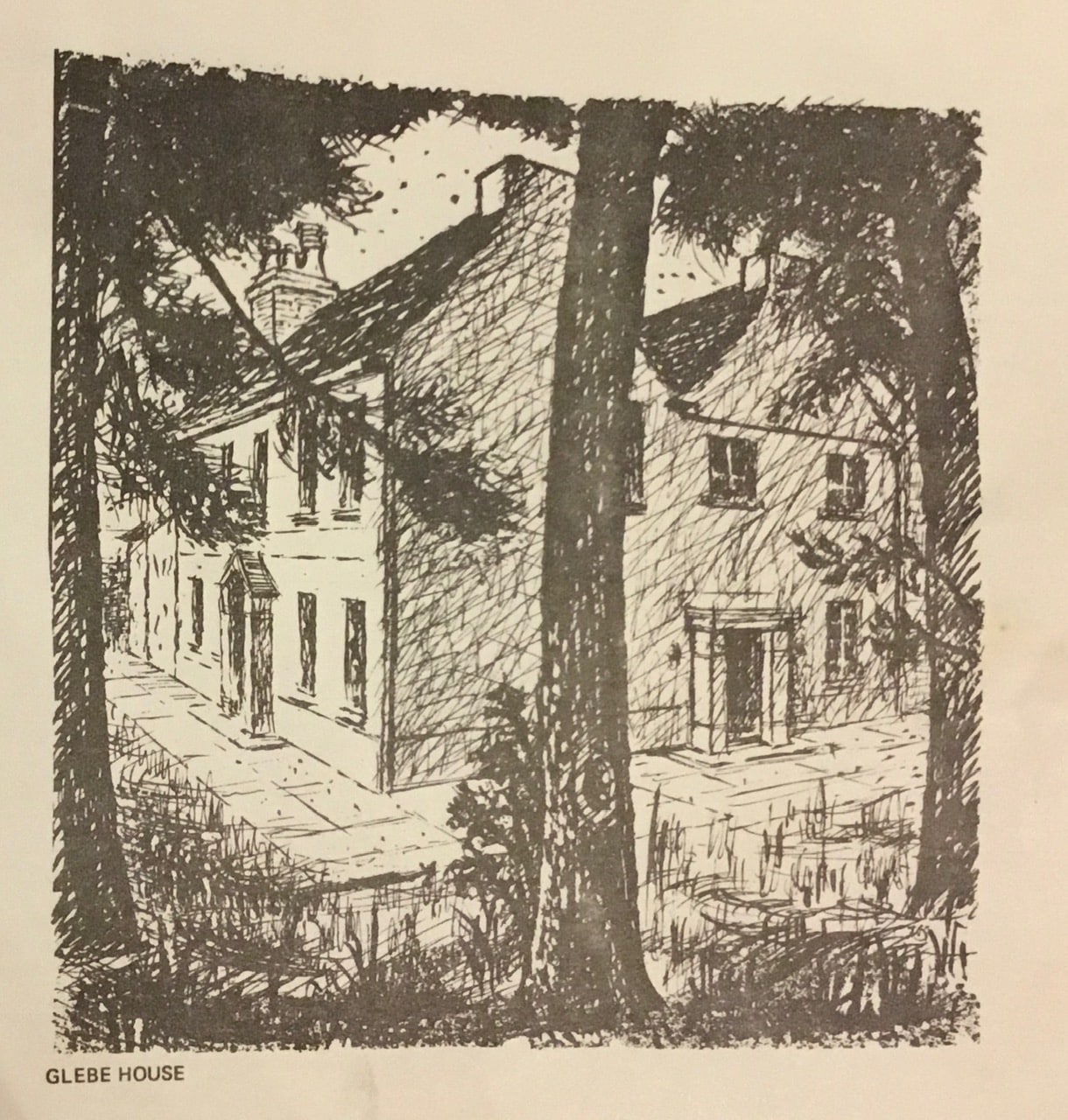
The line of limes trees (seven of them) still stand tall and strong along the roadside, joined after that date of this photo, by seven the other side, in the grounds of what is now Wood House.

Tandridge District Council’s website says:
“We designate conservation areas where we want to protect or enhance places because of their special architectural or historical interest. Conservation area designation helps us better manage change so the character of an area isn’t undermined. Tandridge has 19 conservation areas. Their boundaries can be seen on our Planning Policy Maps.”
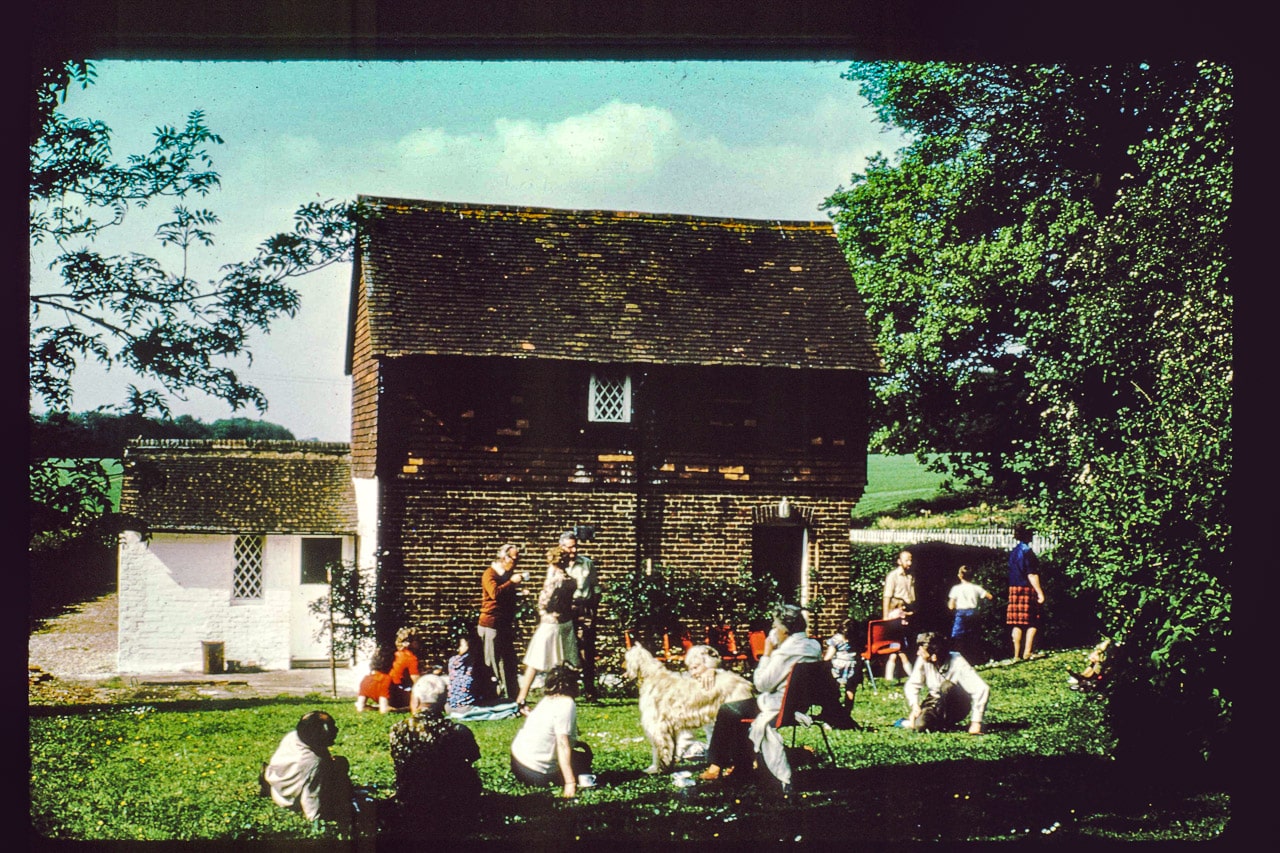
There is a cluster of six listed ‘buildings’ within the conservation area; the church (Grade I), Chaldon Court (Grade II*), the granary by Chaldon Court (Grade II), and three chest tombs to the south west of the church (Grade II). A map and details of the buildings and tombs can be found on Historic England’s website here. In total there are 11 listings in the Parish of Chaldon.

Historic England say:
“Listing is the act of identifying the most important parts of our heritage so they can be protected by law. In listing historic buildings or sites we celebrate their significance and make sure that our history can be enjoyed by present and future generations.”
Most of the houses and cottages in the Conservarion Area date from before 1914. Many show their original use in their names, such as Rectory Cottage, built in 1877 for the coachman or man servant of the Rectory. For some years it was used as a parish room, and is now a private house.
Keepers Cottage in Doctors Lane was built in 1901 for the game keeper of the Merstham / Surrey Estate of Lord Hylton. The Estate Accounts for that year show a payment to the architect for the design of it, and a payment to Richard Whittaker for building it.

In the front of the publication Chaldon Explored, published by Tandridge District Council in 1975, there is a note about Conservation Areas:
“Conservation does not preclude change, some change is inevitable, adaptation to modern needs is vital and acceptable provided always that the changes harmonise with the character of the Conservation Areas, character developed over the centuries.”
The foreword of the same book, by The Rev Lord Sandford, at the time Chair of the English Tourist Authority, says that the book “will serve several valuable purposes. It will further the progress of conservation. It will enlarge and encourage the study of Local History. It will give pleasure and enjoyment to visitors and natives alike. It will show those who take a hand in shaping the future of this village what its past and its present require of them.”
The book is a walk round the architecturally interesting old buildings of the village of Chaldon. The walk begins with the church and ends with Chaldon Court. Almost at the end of the walk and the book comes the passage:
“If we pause by the flint wall around the pond we can turn and enjoy a splendid vista of the whole Conservation Area. Away to our right is The Rookery, The Glebe and other houses nestling in the trees. To the left is the Church and Chaldon Court, with its large farm yard with C17 and C18 black weatherboarded barns and the later unusually long, flint cowshed.”
Unfortunately the two huge barns, which were listed (Grade II) are no longer there. Having been neglected for years, and after planning permission had been given to the owners, Lord Hylton / Merstham Manor Estate, for a scheme to convert them into five executive homes in 1989 (subject to an agreement about the church car park and the pond) they blew down in high winds in early 1990, and conversion was no longer possible. The barns were delisted later in 1990.
The book ends with the note: “although the parish is very small, there is much to be proud of, there is much to cherish.”
(c) Madeline Hutchins 2017 / 2020